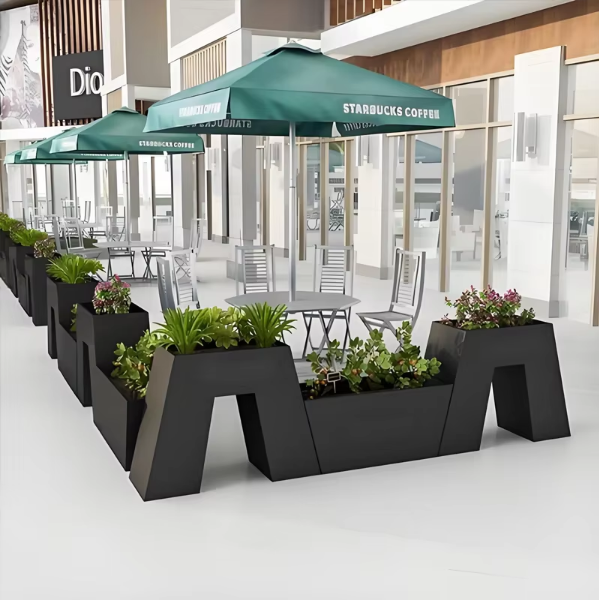
What is wayfinding? In practical terms, it is how people understand a place and move to a destination. Architecture, paths, landmarks, lighting, maps, staff instructions and signs all contribute. Wayfinding signage is the visible communication layer that connects these cues into a repeatable navigation system.
For product options and fabrication capabilities, review our outdoor wayfinding signage range.
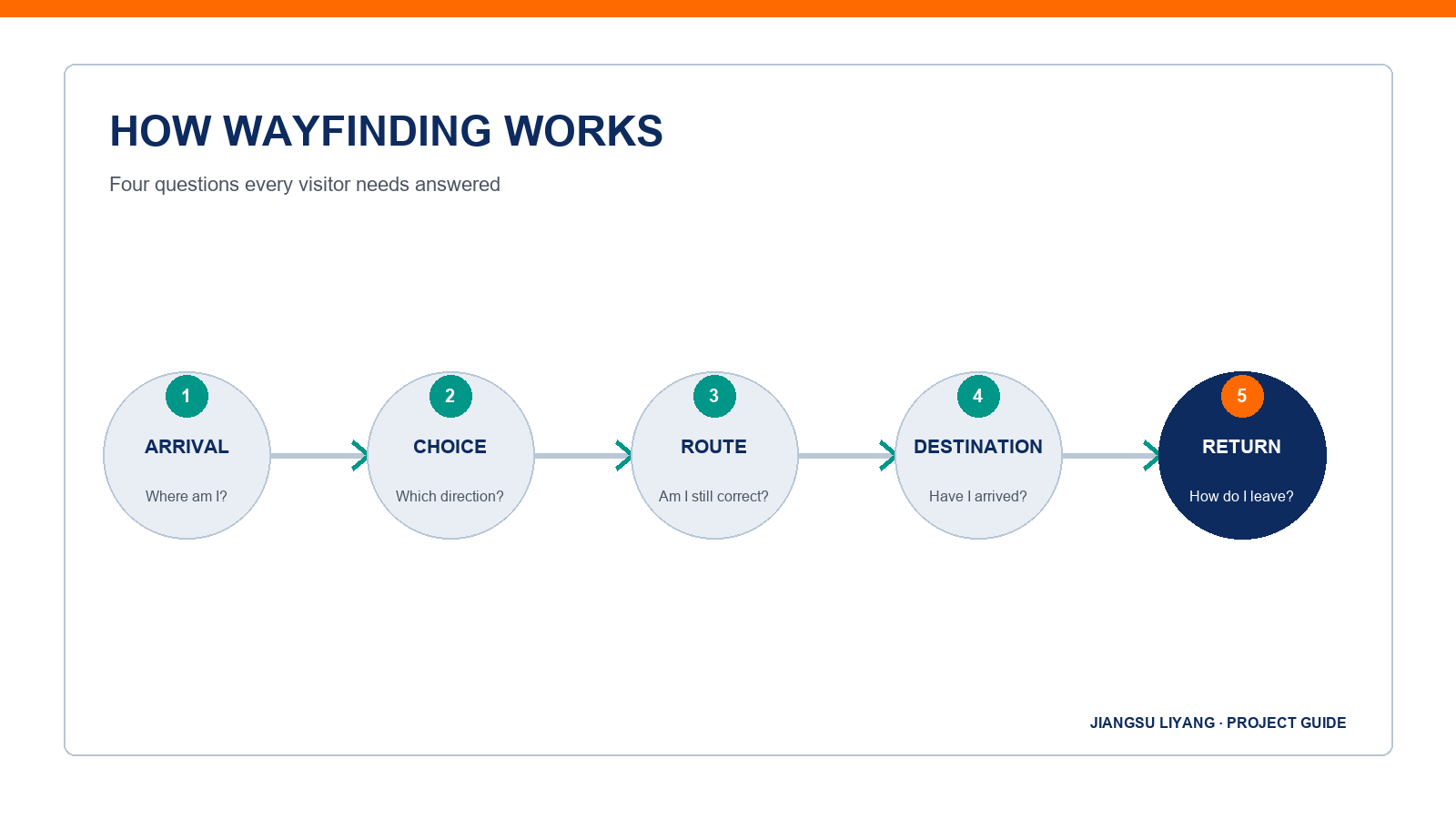
what is wayfinding: the short answer
A complete system answers four questions: Where am I? Where is my destination? Which route should I take? Have I arrived? Identification, directional, orientation and regulatory signs each answer a different part of that journey. They work best when planned as one family rather than purchased as isolated boards.
Key decisions before requesting a quotation
- Spatial logic: Simple routes, visible entrances and memorable landmarks reduce the amount of information signs must carry.
- Naming strategy: Destination names must remain consistent from websites and tickets to maps and physical signs.
- Progressive disclosure: Give users the next useful decision, not every possible destination at once.
- Confirmation: Reassurance signs, building identification and arrival markers prevent uncertainty after a turn.
Turn the requirement into a coordinated project brief
A useful brief connects the product decision to the site and the people who will operate it. Confirm who approves the design, who prepares local engineering, who provides foundations or utilities, who receives the shipment and who maintains the completed installation. Record assumptions instead of leaving them inside email threads. This is especially important when the factory, project designer and installer are in different countries.
For this topic, arrival should respond to where am i?, with gateway, identity sign or site map recorded in the project documents; route choice should respond to which direction?, with directional sign before the decision recorded in the project documents; along the route should respond to am i still correct?, with trailblazer or confirmation marker recorded in the project documents; destination should respond to have i arrived?, with building, zone or facility identification recorded in the project documents; return journey should respond to how do i leave?, with exit, transit, parking and pickup directions recorded in the project documents. That level of coordination makes it easier to detect missing scope before purchase and gives the supplier a clearer basis for drawings, samples and pricing.
Related searches such as wayfinding signs, wayfinding signage, directional signage often describe adjacent questions rather than separate products. They should be handled in the same decision process when the user intent overlaps, while genuinely different configurations can be supported by dedicated product or application pages.
Specification framework
| Item | What drives the decision | What to document |
|---|---|---|
| Arrival | Where am I? | Gateway, identity sign or site map |
| Route choice | Which direction? | Directional sign before the decision |
| Along the route | Am I still correct? | Trailblazer or confirmation marker |
| Destination | Have I arrived? | Building, zone or facility identification |
| Return journey | How do I leave? | Exit, transit, parking and pickup directions |
The table is a planning framework rather than a substitute for local professional design. Applicable codes, authority requirements and site engineering should be confirmed for the destination.
Information to include in your RFQ
A clear request for quotation helps suppliers price the same scope and reduces late revisions. Include:
- site plan and destination list
- primary visitor groups
- arrival modes and key entrances
- high-confusion decision points
- existing sign audit
- brand and accessibility requirements
- maintenance owner and update process
Ask bidders to list inclusions, exclusions, drawings, samples, packing, delivery terms, installation boundaries, warranty and recommended spare parts. Compare lifecycle serviceability as well as initial price.
How to evaluate a supplier response
- Confirm product fit. Check that the proposed model and configuration match the site, users and intended function.
- Normalize the scope. Put every quotation against the same material, finish, accessories, logistics and installation boundary.
- Review evidence. Request dimensioned drawings, material information, finish samples and relevant project or factory evidence.
- Resolve interfaces. Identify who is responsible for foundations, utilities, unloading, assembly, testing and local approvals.
- Plan maintenance. Confirm access, cleaning, consumables, replaceable components and after-sales documentation.
Common procurement mistakes to avoid
- Comparing visual appearance before confirming spatial logic and naming strategy.
- Approving a concept without documenting how progressive disclosure will be verified for the actual site.
- Leaving confirmation, access or maintenance responsibilities until installation begins.
- Comparing a factory-only offer with a delivered or installed offer without normalizing exclusions.
- Treating a supplier’s standard configuration as proof of compliance with local codes or authority requirements.
The best value is not automatically the lowest initial quotation. A proposal that clearly defines interfaces, documentation, replaceable parts and maintenance can reduce change orders and downtime over the product’s service life.
Frequently asked questions
Is wayfinding the same as signage?
No. Signage is one tool within wayfinding, which also includes spatial design, landmarks, lighting, maps and human assistance.
Why do wayfinding projects become inconsistent?
Signs are often added one at a time without a master message schedule, location plan or ownership process.
Can an existing site be improved without replacing every sign?
Often yes. Start with an audit, fix terminology and critical decision points, then phase structural replacements by priority.
Discuss your project
Jiangsu Liyang supports project-based customization for overseas public-space and commercial projects. View a representative product configuration, browse our project experience, or send your drawings and requirements for a quotation.