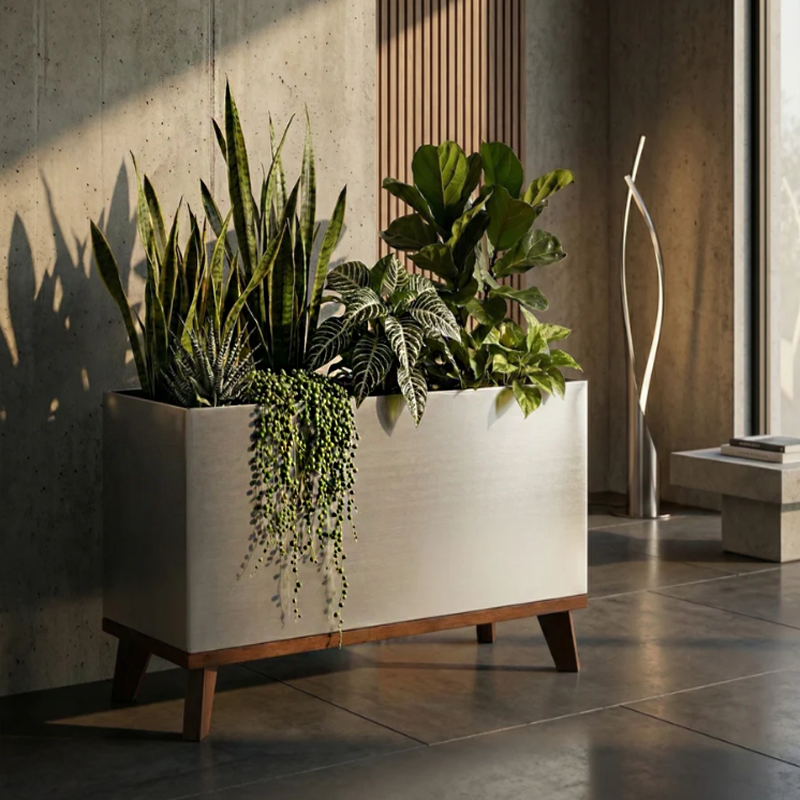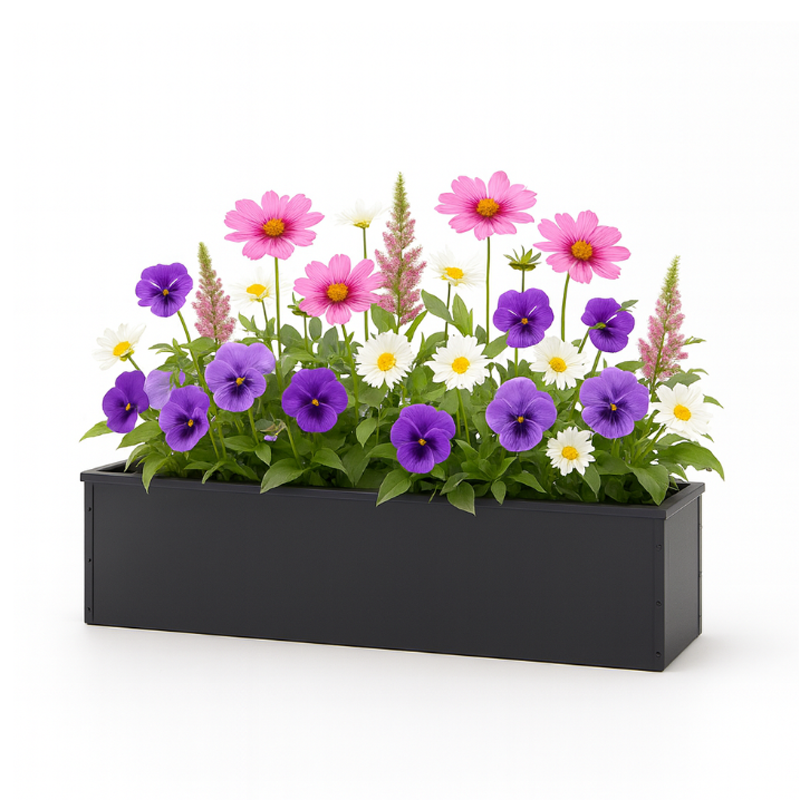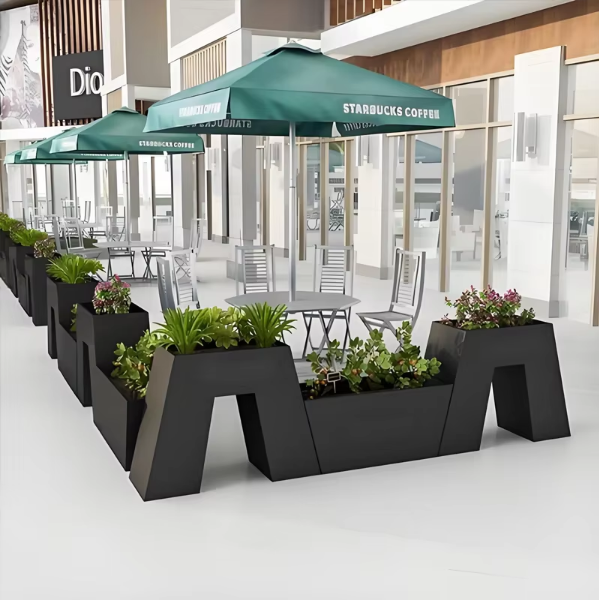
Good metal planter design coordinates horticulture with fabrication. The planter must provide enough soil volume, manage water, resist outward soil pressure, protect surrounding paving and remain practical to deliver, place and maintain. Selecting a shape from a catalog is only the first step.
For product options and fabrication capabilities, review our commercial street planter range.
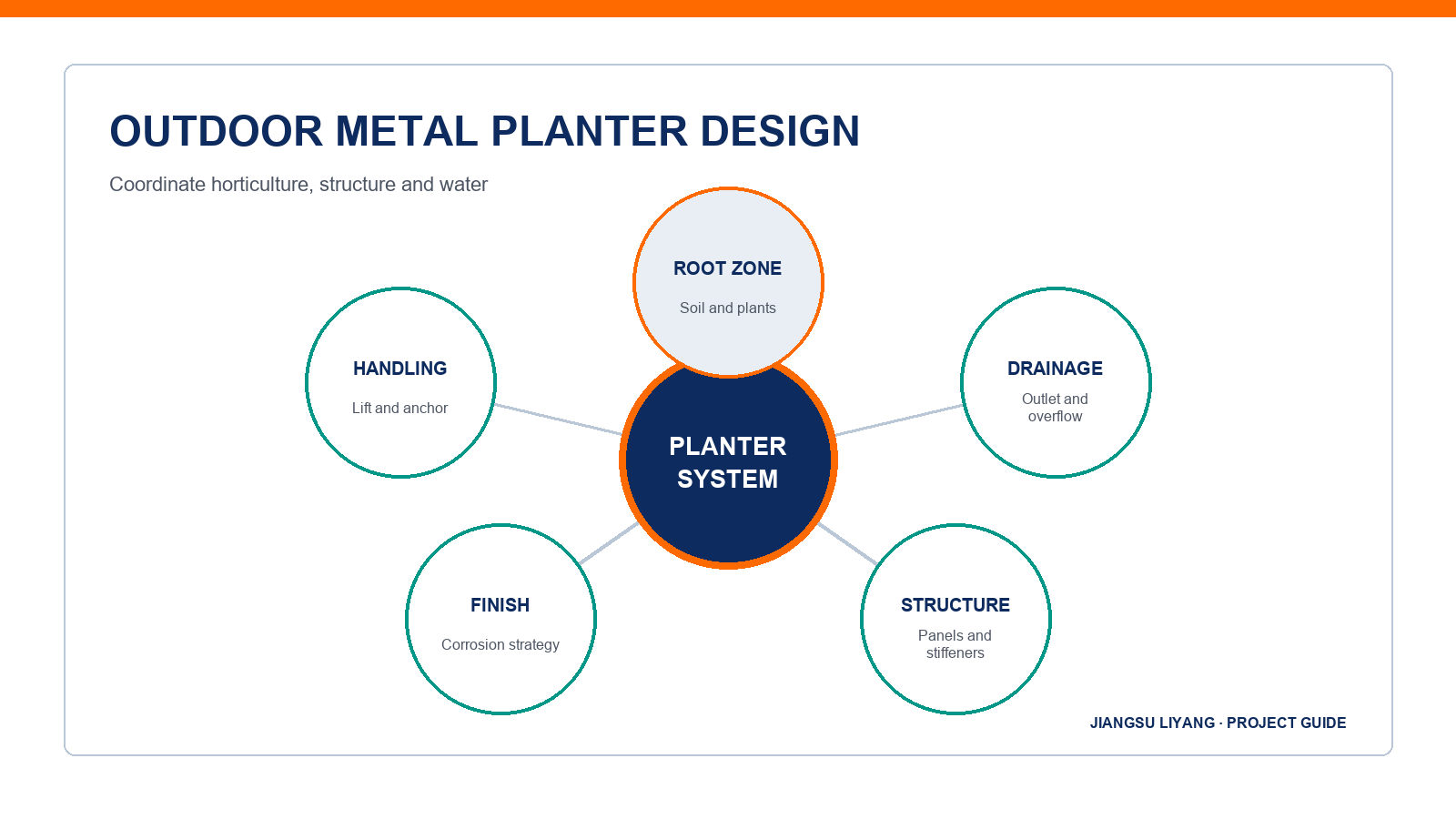
metal planter design: the short answer
Start with plant type, root volume, irrigation and drainage. Then set external dimensions, internal liner or insulation strategy, structural stiffening, base and lifting details, finish, anchoring and access. Large planters should be reviewed as loaded outdoor structures, not simply oversized pots.
Key decisions before requesting a quotation
- Planting volume: Trees, shrubs and seasonal plants need different soil depths, root space and irrigation strategies.
- Water management: Provide controlled drainage, overflow and separation from sensitive paving or interior spaces.
- Structure: Panel thickness, folds, frames and stiffeners control deflection under wet soil and handling loads.
- Finish and detailing: Edges, seams, feet, liners and coating selection affect appearance, corrosion and service life.
Turn the requirement into a coordinated project brief
A useful brief connects the product decision to the site and the people who will operate it. Confirm who approves the design, who prepares local engineering, who provides foundations or utilities, who receives the shipment and who maintains the completed installation. Record assumptions instead of leaving them inside email threads. This is especially important when the factory, project designer and installer are in different countries.
For this topic, external shell should respond to appearance and structural enclosure, with material, seams, stiffening and finish recorded in the project documents; liner/root zone should respond to contains soil and manages moisture, with compatibility, insulation and replacement recorded in the project documents; drainage layer should respond to moves excess water away, with outlets, overflow and maintenance access recorded in the project documents; base/feet should respond to supports load and protects paving, with leveling, air gap, forklift or lifting needs recorded in the project documents; anchoring should respond to controls movement or theft where required, with coordinate with substrate and waterproofing recorded in the project documents. That level of coordination makes it easier to detect missing scope before purchase and gives the supplier a clearer basis for drawings, samples and pricing.
Related searches such as outdoor metal planters, custom metal planters, large metal planters outdoor often describe adjacent questions rather than separate products. They should be handled in the same decision process when the user intent overlaps, while genuinely different configurations can be supported by dedicated product or application pages.
Specification framework
| Item | What drives the decision | What to document |
|---|---|---|
| External shell | Appearance and structural enclosure | Material, seams, stiffening and finish |
| Liner/root zone | Contains soil and manages moisture | Compatibility, insulation and replacement |
| Drainage layer | Moves excess water away | Outlets, overflow and maintenance access |
| Base/feet | Supports load and protects paving | Leveling, air gap, forklift or lifting needs |
| Anchoring | Controls movement or theft where required | Coordinate with substrate and waterproofing |
The table is a planning framework rather than a substitute for local professional design. Applicable codes, authority requirements and site engineering should be confirmed for the destination.
Information to include in your RFQ
A clear request for quotation helps suppliers price the same scope and reduces late revisions. Include:
- plant species and mature root needs
- soil depth and saturated weight basis
- irrigation and drainage route
- planter dimensions and module joints
- material and finish samples
- lifting, delivery and placement plan
- anchoring and maintenance responsibilities
Ask bidders to list inclusions, exclusions, drawings, samples, packing, delivery terms, installation boundaries, warranty and recommended spare parts. Compare lifecycle serviceability as well as initial price.
How to evaluate a supplier response
- Confirm product fit. Check that the proposed model and configuration match the site, users and intended function.
- Normalize the scope. Put every quotation against the same material, finish, accessories, logistics and installation boundary.
- Review evidence. Request dimensioned drawings, material information, finish samples and relevant project or factory evidence.
- Resolve interfaces. Identify who is responsible for foundations, utilities, unloading, assembly, testing and local approvals.
- Plan maintenance. Confirm access, cleaning, consumables, replaceable components and after-sales documentation.
Common procurement mistakes to avoid
- Comparing visual appearance before confirming planting volume and water management.
- Approving a concept without documenting how structure will be verified for the actual site.
- Leaving finish and detailing, access or maintenance responsibilities until installation begins.
- Comparing a factory-only offer with a delivered or installed offer without normalizing exclusions.
- Treating a supplier’s standard configuration as proof of compliance with local codes or authority requirements.
The best value is not automatically the lowest initial quotation. A proposal that clearly defines interfaces, documentation, replaceable parts and maintenance can reduce change orders and downtime over the product’s service life.
Frequently asked questions
Do metal planters need liners?
Often, but the choice depends on metal, finish, irrigation, soil chemistry and maintenance. Define the moisture-management system as a whole.
How are large planters moved?
Design lifting points, forklift access or removable panels before fabrication and consider both empty and planted conditions.
What causes metal planter panels to bow?
Wet-soil pressure, long unsupported panels, insufficient folds or stiffening and handling loads can all contribute.
Discuss your project
Jiangsu Liyang supports project-based customization for overseas public-space and commercial projects. View a representative product configuration, browse our project experience, or send your drawings and requirements for a quotation.