Summary:
Selecting the right material is one of the most important decisions in an outdoor signage project. A good sign must not only look professional, but also withstand sun exposure, rain, wind, temperature changes, and long-term public use. This article explains how to choose suitable signage materials based on project location, durability requirements, design style, installation method, and maintenance expectations.
Professional Material Selection for Outdoor Signage
Outdoor signage must do more than look attractive. In commercial streetscapes, transport hubs, campuses, industrial parks, and public facilities, signs are expected to communicate clearly, reinforce brand image, and perform reliably in demanding outdoor conditions. From a professional project perspective, material selection is one of the most critical decisions in the entire signage process because it directly affects durability, appearance, fabrication cost, maintenance, and service life.
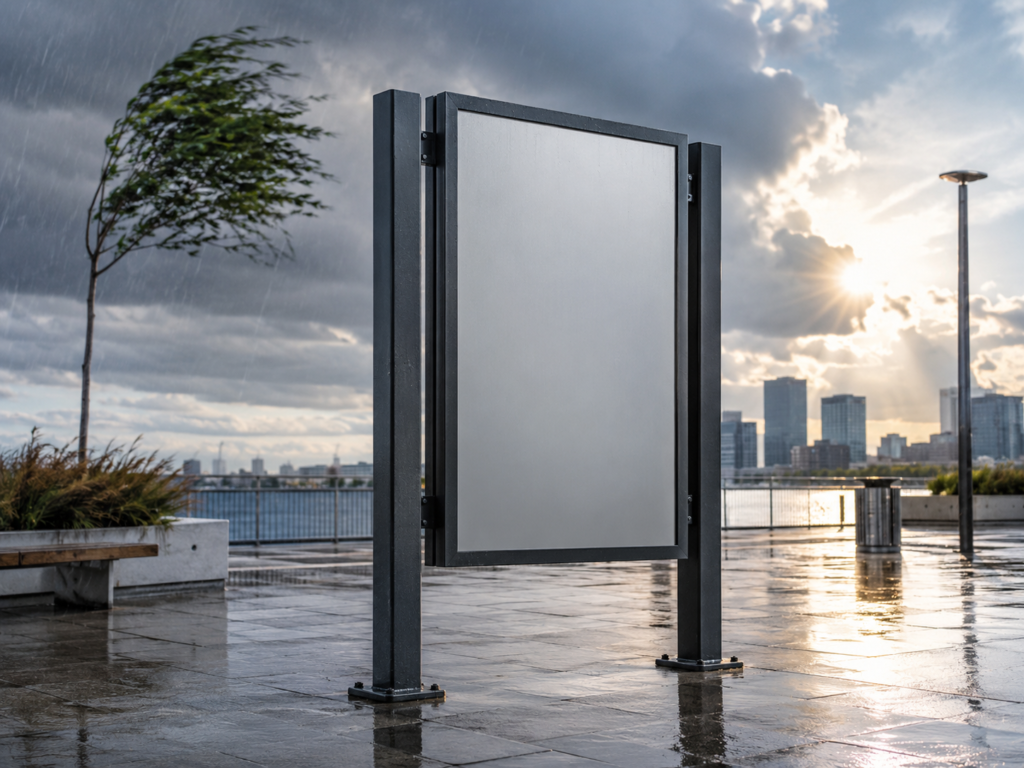
The first step is to assess the installation environment. A sign placed in a coastal location will face salt spray, humidity, and a higher risk of corrosion. A sign used in a busy urban area may need better impact resistance and easier cleaning. In regions with strong sunlight, UV stability becomes essential to prevent fading, yellowing, or surface degradation. Wind exposure, temperature fluctuations, and rainfall also influence the structural and finish requirements of the sign system.
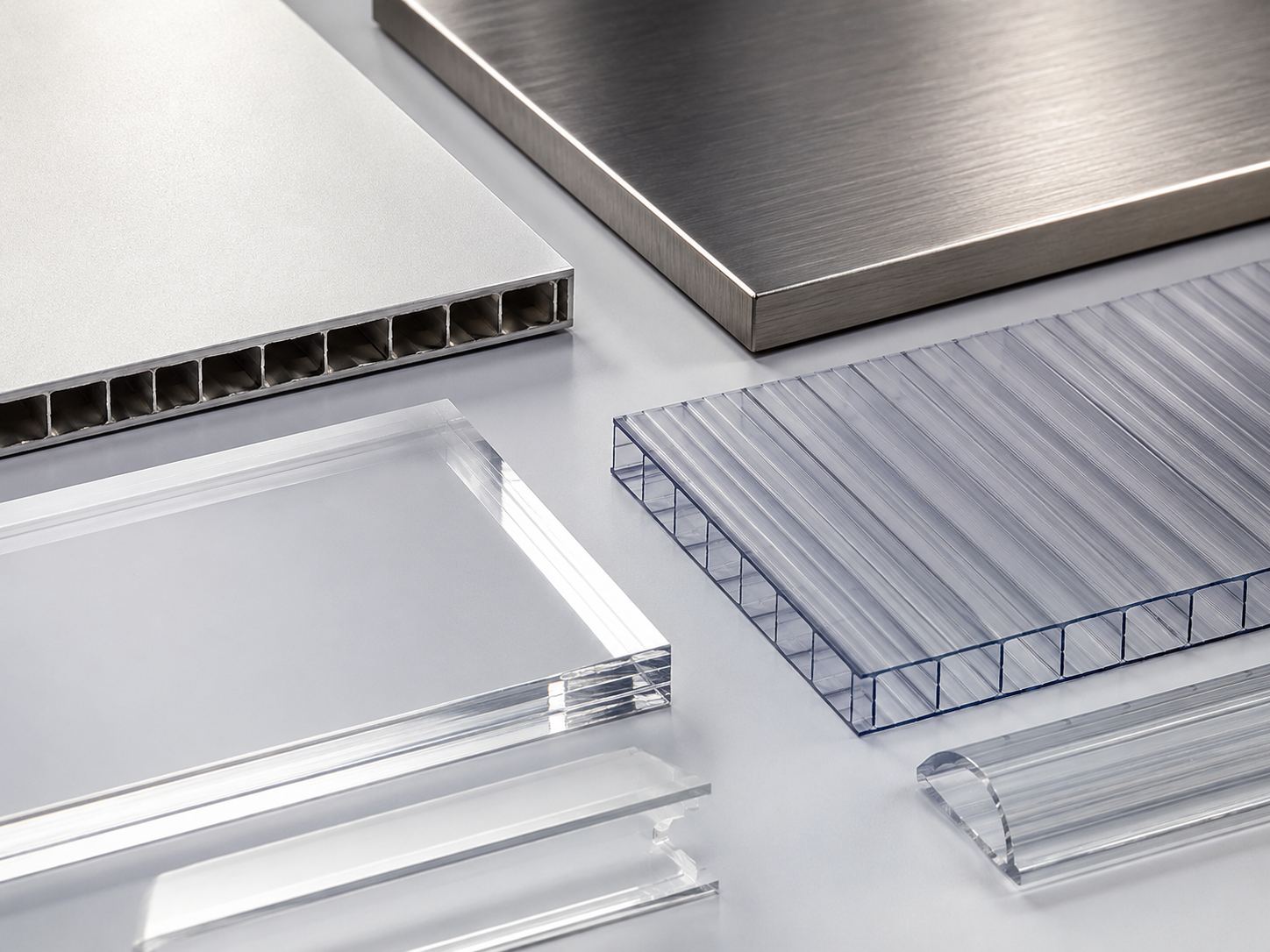
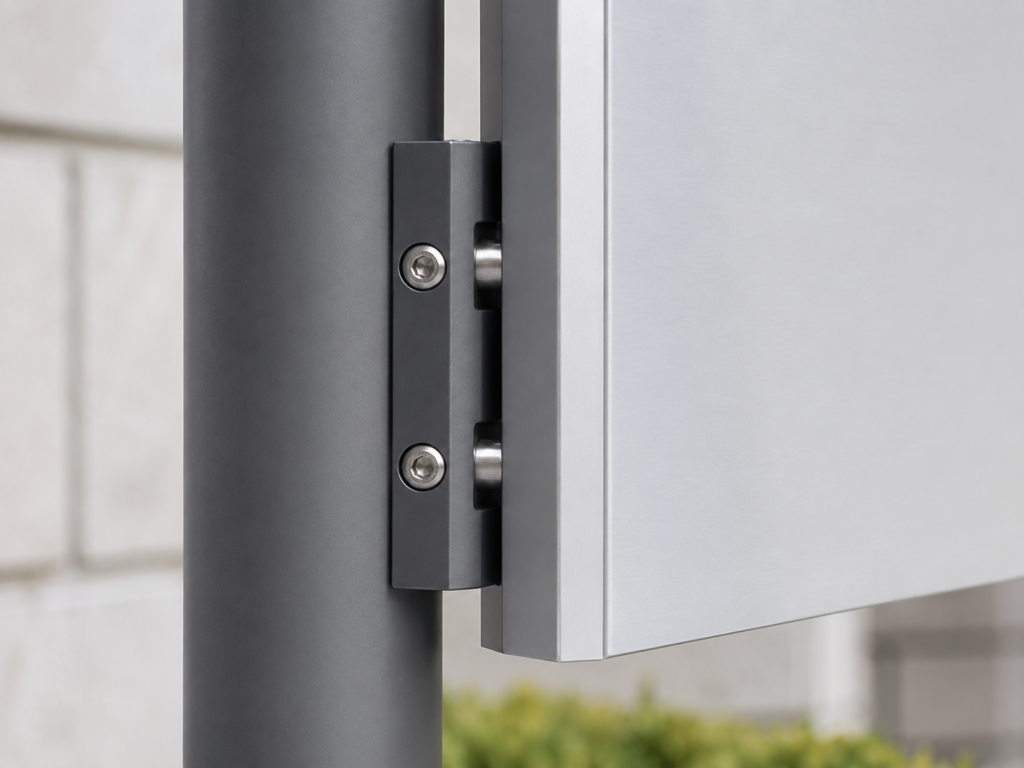
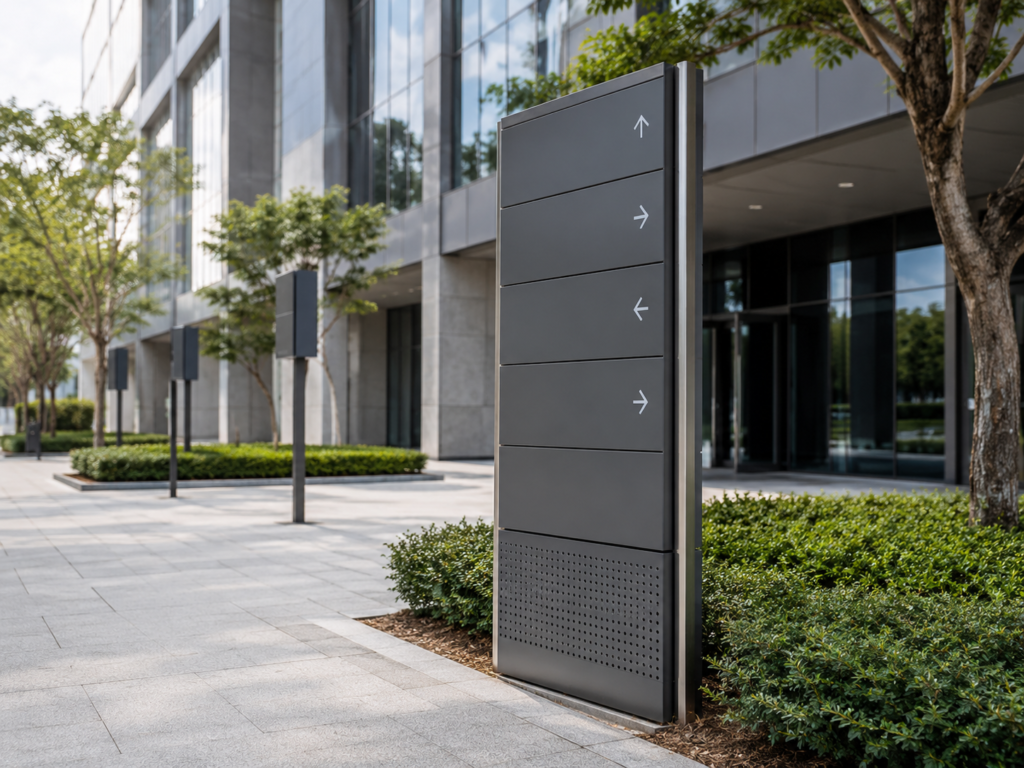
Aluminum remains one of the most practical choices for outdoor signage. It is lightweight, corrosion-resistant, easy to fabricate, and suitable for many applications, including directional signs, wall-mounted panels, information boards, and freestanding wayfinding systems. Powder-coated or anodized aluminum performs especially well outdoors because it combines good weather resistance with a clean, modern appearance. For many general-purpose projects, aluminum offers an excellent balance of cost, performance, and design flexibility.
Stainless steel is often preferred when a premium architectural look and higher long-term durability are required. It is a strong option for building identification signs, hospitality projects, public infrastructure, and commercial developments where finish quality matters. Brushed stainless steel creates a refined, professional appearance and is less likely to show fingerprints or surface wear than highly polished finishes. However, stainless steel is heavier and usually more expensive to process, so it should be specified where its structural and visual advantages justify the additional investment.
Acrylic is widely used for brand signage, logo letters, and illuminated sign faces because it offers excellent clarity, smooth color presentation, and a clean, contemporary look. It is especially effective for signs that rely on internal lighting or halo illumination. For outdoor use, it is important to choose UV-stable grades and use proper mounting methods to reduce the risk of cracking or discoloration over time.
Polycarbonate is another valuable option, particularly for applications that require stronger impact resistance. Compared with acrylic, polycarbonate is tougher and less likely to break under physical stress, making it a suitable choice for transport-related signage, protective covers, or areas where vandalism and accidental impact are concerns. While it may not always deliver the same visual finish as acrylic, it provides excellent safety and durability performance.
Professionals should never select signage materials based on price alone. The correct decision should consider expected lifespan, maintenance frequency, lighting requirements, installation method, local climate, and the overall positioning of the project. In practice, the best outdoor signage systems are those that align material performance with the real operating environment.
In conclusion, there is no single best material for every project. Aluminum is ideal for versatile outdoor use, stainless steel suits premium and highly durable applications, acrylic is effective for illuminated branding, and polycarbonate is a strong choice for impact-sensitive environments. A material strategy based on project conditions will always produce better long-term results than a purely cost-driven decision.
Quick Material Comparison
| Material | Best For | Key Advantages | Notes |
| Aluminum | Wayfinding signs, information boards, wall signs | Lightweight, corrosion-resistant, easy to fabricate | Strong all-round choice for most outdoor projects |
| Stainless Steel | Building ID signs, hospitality, premium public projects | Premium appearance, durable, strong structural feel | Higher weight and processing cost |
| Acrylic | Illuminated logos, sign faces, decorative branding | Clean appearance, strong color clarity, ideal for lighting | Use UV-stable grades for outdoor exposure |
| Acrylic | Transport signs, protective covers, high-impact areas | Excellent impact resistance, durable, safer under stress | Slightly more functional than decorative in appearance |